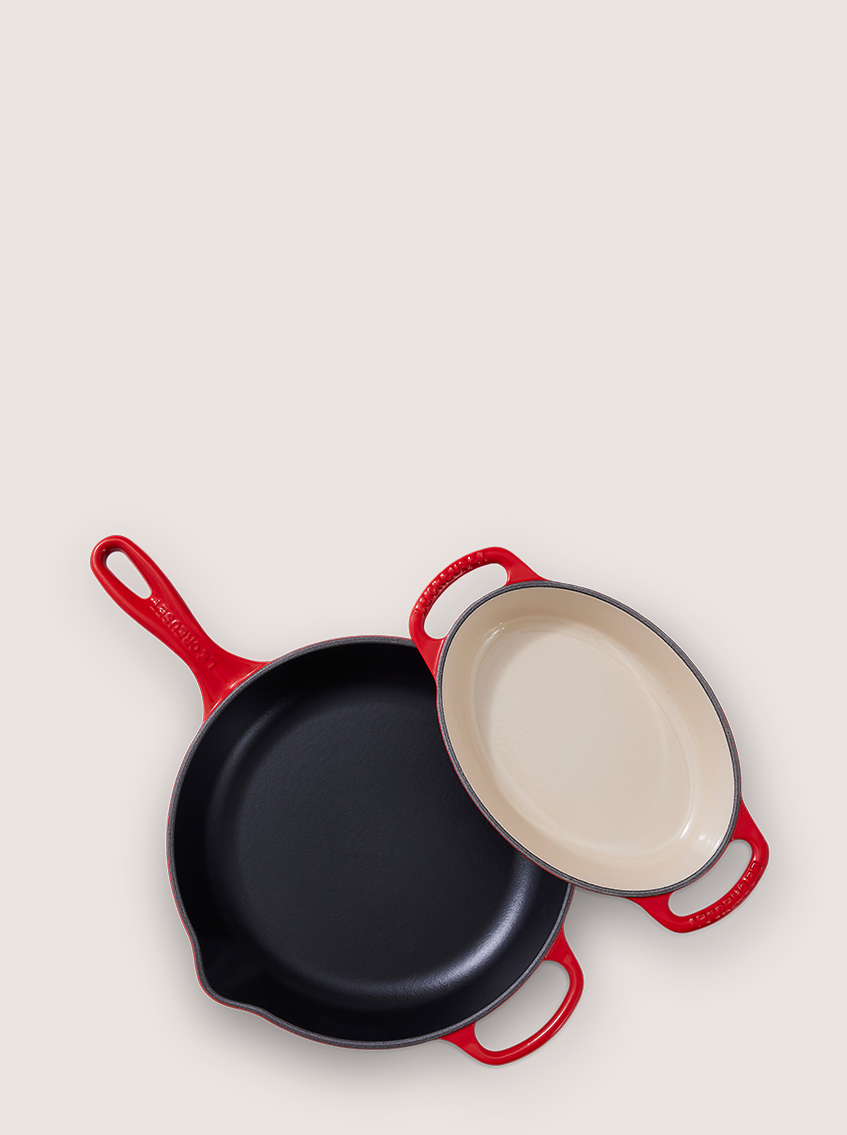
Skillet vs Frying Pan: A Comparison Guide
Two everyday essentials, two very different cooking experiences.
They might look similar at a glance, but the skillet and the frying pan each bring something unique to your kitchen. When it comes to heat retention, agility, or the perfect sear, the right choice makes all the difference.
Both are versatile, yes — but they shine in different culinary moments. Here’s everything you need to know to choose the best one for your next recipe.

The Skillet: Built for Power and Precision
Heavy-duty and heat-loving, the skillet is your go-to pan when you want bold flavors, deep browning, and oven-to-table versatility. Reach for your skillet when you're aiming for a steak with a restaurant-worthy crust, baking cornbread with crispy golden edges, or preparing one-pan meals that start on the stovetop and finish bubbling in the oven.

Material
Our skillets are crafted from enameled cast iron with a black satin interior that develops a natural patina over time.


The Frying Pan: Everyday-Ready
The frying pan shape spans a wide range of materials and coatings—from non-stick and ceramic to stainless steel and cast iron—offering everything from everyday ease to high-heat performance. Its low, flared sides make it ideal for quick, precise cooking: flipping a delicate omelet, sautéing crisp vegetables, or reducing a sauce.

Shape and Design
Flared, sloped sides and a flat base ensure even contact with the heat source, while allowing ingredients to glide effortlessly for tossing, stirring, and flipping.

Materials
Available in in a number of different materials, from toughened non-stick and ceramic non-stick to stainless steel and cast iron.

Everyday ease
Great for quick weekday meals, with non-stick options allowing for minimal-oil cooking.


Which One Should You Choose?

Skillets: Best for…
Forged from cast iron with tall, straight sides and excellent heat retention, this skillet excels at everything from sizzling sears and rich browns to oven‑to‑table bakes—making it your go‑to for golden cornbread, fluffy omelets, or hearty one‑pan dinners.
- Achieving a deep sear on steaks, chops, or burgers
- One-pan meals that go from stovetop to oven
- Holding heat for longer cooking sessions
- Developing fond and rich pan sauces
- Excellent for stove-to-oven transitions

Frying Pans: Best for…
With options in non‑stick, ceramic, stainless steel, and cast iron finishes, our frying pans adapt to any kitchen task. Non‑stick models in particular shine when you need:
- Flawless flips: eggs, pancakes or delicate fish fillets—no sticking, no fuss
- Light sautéing: veggies and stir‑fries in minimal oil
- Smooth sauce reductions: sauces and glazes glide across the surface
- Cooking foods that require frequent movement or tossing
- Maneuverability for everyday cooking
FAQs
The skillet shape is exclusive to cast iron with high, straight sides and built-in pouring spouts—ideal for oven-to-table dishes and steady heat retention. Frying pans come in many materials, have lower, sloped sides for tossing, and perform based on their coating or metal rather than shape alone.
Material drives performance more than shape. A cast iron frying pan sears just like a skillet, and a non-stick skillet (if it existed) would still handle delicate dishes well—but heavier cast iron, regardless of shape, will always retain more heat and feel weighty for flips.
Yes—our cast iron skillets are designed to go from stovetop to oven without missing a beat.
Which is better for frying versus sautéing?
For frying, choose a pan (skillet or frying pan) that distributes heat evenly and holds temperature under oil. For sautéing, a pan with sloped sides and a responsive heat-up time—like a non-stick or stainless steel frying pan—is ideal.
If you cook slow-roasted meals or love a crisp sear, start with the cast iron skillet. If you lean toward quick breakfasts, stir-fries, or minimal-oil cooking, begin with a non-stick frying pan.
Absolutely—sloped sides and balanced weight make most frying pans perfect for keeping food in motion and achieving even browning, whether you’re cooking vegetables, shrimp, or sliced meats.
More to Explore
Are you interested in helpful tips and tricks for your cookware, finding colourful inspiration for your kitchen, or exploring delightful new recipes to try? We have a wide variety of guides and articles available for you to gain inspiration from. Feel free to take a look and explore!
.jpg)